 ultimate-guide
Benefits of Probiotics for Mature Skin
Table of Contents
- What the Gut-Skin Axis Means for Aging Skin
- How Probiotics Combat Skin Aging: Collagen, Ceramides, and Oxidative Stress
- Topical vs. Oral Probiotics for Mature Skin: Which Works Better?
- Best Probiotic Ingredients for Mature Skin: Strains, Prebiotics, and Postbiotics
- How to Use Probiotic Jelly Mist in a Mature Skin Routine
- Common Mistakes When Adding Probiotics to Mature Skin Care
- Conclusion: Building a Realistic Probiotic Routine for Mature Skin
- Frequently Asked Questions
Last Updated: September 27, 2026
What the Gut-Skin Axis Means for Aging Skin
The gut-skin axis is the bidirectional communication network linking your digestive tract and your skin, and it becomes more consequential as you age. This connection runs through immune signaling, inflammation modulation, and microbial diversity. For anyone exploring the benefits of probiotics for mature skin, this axis is where the story starts.
How the Gut Microbiome Influences Skin Barrier Integrity
Your skin barrier depends on a delicate balance of lipids, ceramides, and a slightly acidic mantle. When gut bacteria fall out of balance, inflammatory signals travel through the bloodstream and weaken that barrier. The result: more transepidermal water loss, more reactivity, and a complexion that looks tired even after a full night's sleep.
How Probiotics Combat Skin Aging: Collagen, Ceramides, and Oxidative Stress
Probiotics support mature skin through four overlapping mechanisms: reducing oxidative stress, supporting ceramide synthesis, protecting collagen and elastin from inflammatory breakdown, and reinforcing the skin barrier so the other three can actually hold. Understanding how each one works makes it easier to judge whether a product or supplement is likely to do anything at all.
Oxidative Stress and the Extracellular Matrix
Reactive oxygen species, the unstable molecules generated by UV exposure, pollution, and normal metabolism, attack the extracellular matrix, the scaffold of collagen, elastin, and glycosaminoglycans that keeps skin firm and springy. Over decades, this oxidative load accumulates, and the matrix loses density. Certain probiotic strains produce antioxidant metabolites and support the body's own antioxidant enzymes, which helps blunt that cumulative damage.
Ceramide Synthesis and Barrier Lipids
Ceramides are waxy lipids that make up a large share of the skin barrier. Mature skin typically has fewer of them, which is one reason transepidermal water loss rises with age and why skin feels tight and looks dull. Probiotic lysates and postbiotics applied topically have been studied for their ability to support the skin's own ceramide production and to reinforce the lipid matrix between corneocytes.
Collagen, Elastin, and Chronic Low-Grade Inflammation
Collagen isn't destroyed by age alone, it's destroyed faster when chronic low-grade inflammation keeps activating matrix metalloproteinases (MMPs), the enzymes that break down collagen and elastin. A balanced gut microbiome supports a calmer systemic inflammatory tone, which in turn reduces the background MMP activity that accelerates collagen loss. This is why probiotics are best understood as protecting existing collagen rather than rebuilding lost collagen.
The Skin Barrier as the Foundation
All three mechanisms depend on a functional barrier. If the barrier is compromised, moisture escapes, irritants penetrate, and any active you apply on top, retinol, vitamin C, exfoliating acids, becomes harder to tolerate. Probiotics support the barrier first, which is what makes the rest of a mature-skin routine work better.
What This Means in Practice
- Probiotics don't replace sunscreen, retinoids, or vitamin C, they make those products easier to use consistently.
- Expect barrier and hydration changes first (days to weeks), then longer-term shifts in tone and fine lines (weeks to months).
- Oral and topical approaches hit different parts of this picture; combining them addresses both the systemic and surface sides.
Topical vs. Oral Probiotics for Mature Skin: Which Works Better?
Topical probiotics act directly on the skin's surface, while oral supplementation works through the gut. The two approaches are complementary, not interchangeable. Topical formulas deliver probiotic lysates and postbiotics straight to the acidic mantle, while oral strains support systemic inflammation modulation.
| Approach | Primary Action | Best For | Onset |
|---|---|---|---|
| Topical probiotics | Supports skin barrier integrity and pH balance | Redness, dryness, reactive skin | Days to weeks |
| Oral supplementation | Supports gut microbiome homeostasis | Systemic inflammation, overall skin tone | Weeks to months |
| Combined use | Addresses both surfaces at once | Mature skin with multiple concerns | Weeks |
Best Probiotic Ingredients for Mature Skin: Strains, Prebiotics, and Postbiotics
The best probiotic ingredients for mature skin combine three things: specific, named strains; prebiotics that feed them; and postbiotics that deliver ready-made benefits. Most articles stop at "look for Lactobacillus", that's not specific enough to be useful. Strain-level identification is what separates a formula with evidence behind it from a marketing label.
Why Strain Names Matter More Than the Genus
Lactobacillus is a genus that contains dozens of species, and each species contains multiple strains with different effects. A label that says "Lactobacillus" tells you almost nothing. A label that says Lactobacillus plantarum tells you the species. A label that includes a strain designation, the alphanumeric code after the species name, tells you exactly which isolate was studied.
Strains Studied for Mature-Skin Concerns
A few species come up repeatedly in research relevant to aging skin:
- Lactobacillus plantarum, studied for its role in supporting barrier function and modulating inflammation, both of which matter for fine lines and reactivity.
- Lactobacillus rhamnosus, frequently researched for its effects on systemic inflammation and gut barrier integrity, which connects back to the gut-skin axis.
- Bifidobacterium longum, associated with calming inflammatory signaling and supporting skin hydration.
- Bifidobacterium breve, studied for its role in the gut microbiome and its downstream effects on skin tone and reactivity.
- Lactobacillus reuteri, researched for its influence on the skin microbiome and its potential to support a healthy inflammatory response.
Prebiotics: Feeding the Good Bacteria
Prebiotics are non-digestible fibers and sugars, inulin, oligofructose, galacto-oligosaccharides, that feed beneficial bacteria already living on your skin or in your gut. In topical formulas, prebiotics support the resident microbiome rather than introducing new organisms. In oral supplements, they help the supplemented strains survive and colonize. A formula that pairs probiotics with prebiotics is often described as a synbiotic, and for mature skin, that pairing tends to be more useful than probiotics alone.
Postbiotics: The Ready-Made Benefits
Postbiotics are the metabolic byproducts probiotics produce, organic acids, peptides, cell-wall fragments, and other compounds. They don't need to be alive to work, which makes them more stable in topical formulas and easier to formulate with other actives. For mature skin, postbiotics are often the ingredient doing the visible work: supporting the acidic mantle, calming reactivity, and reinforcing the barrier.
Dietary Sources vs. Supplements: What to Look For
Fermented foods, yogurt with live cultures, kefir, sauerkraut, kimchi, miso, tempeh, provide dietary probiotics, but the strain diversity is limited to what the fermentation process produces, and the amounts vary batch to batch. Supplements offer consistent dosing and targeted strains, but the label quality varies widely.
When comparing products, look for:
- Named species and, ideally, strain designations
- A CFU count that matches the manufacturer's stability testing (not just the number at time of manufacture)
- Prebiotics or postbiotics listed alongside the probiotic strains
- A form that survives the route it's meant to take, capsules for gut delivery, lysates or postbiotics for topical use
NIH Office of Dietary Supplements probiotic fact sheet
How to Use Probiotic Jelly Mist in a Mature Skin Routine
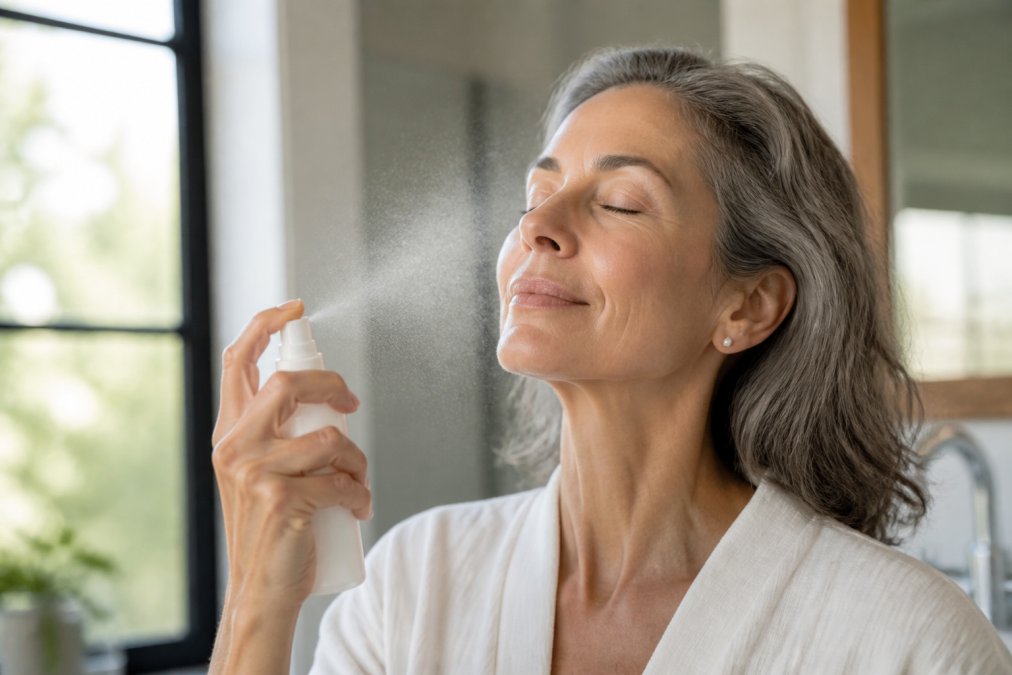
Using a probiotic jelly mist is simple: cleanse, mist, then continue with your usual serums and moisturizer. The lightweight format absorbs quickly and layers well under heavier products.
Layering with Retinoids and AHAs
Probiotic products layer well with retinoids and AHAs, but timing matters. Apply the jelly mist first, let it absorb, then follow with your active. This order buffers potential irritation while supporting skin pH balance.
Common Mistakes When Adding Probiotics to Mature Skin Care
The biggest mistake is expecting overnight results. Probiotics support skin gradually, and most people notice hydration and calmness first, then longer-term changes in tone and fine lines.
Other frequent errors:
- Using probiotics only when skin flares, rather than consistently
- Skipping sunscreen because "the probiotic handles it"
- Mixing too many new actives at once and blaming the probiotic for irritation
- Choosing products with unnamed strains and no prebiotic or postbiotic support
Conclusion: Building a Realistic Probiotic Routine for Mature Skin
Mature skin rarely responds to a single hero product. It responds to a routine that supports the barrier, calms inflammation, and stays consistent long enough to matter.
Frequently Asked Questions
Should a 50 year old woman take probiotics?
Probiotics can support skin hydration, barrier integrity, and collagen synthesis in mature skin, but they are not a replacement for a balanced diet or dermatologist-prescribed treatments. A 50-year-old woman can try oral supplements or topical probiotic lysates, ideally alongside prebiotic fiber. Start with one product, track changes in fine lines and dryness over 8 to 12 weeks, and stop if redness or irritation appears.
How do probiotics support the skin barrier in aging individuals?
Aging reduces ceramide production and weakens the lipid barrier, which raises transepidermal water loss. Probiotics help by supporting microbiome homeostasis and inflammation modulation. Topical strains and lysates can reinforce skin barrier integrity, while oral strains may reduce systemic oxidative stress. The result is better skin hydration, less reactivity, and a more resilient acidic mantle. Pairing probiotics with ceramide-rich moisturizers often works better than either alone.
Can topical probiotics help reduce the appearance of fine lines?
Topical probiotics and postbiotics can soften the look of fine lines by improving hydration and supporting collagen synthesis over time. They do not act like retinoids, so expect gradual changes rather than rapid smoothing. Clinical trials on probiotic lysates show improvements in skin elasticity and dermal density after consistent use. For best results, apply after cleansing and before heavier creams, and give it at least two months.
How long does it take to see results from probiotic skincare?
Most people notice better skin hydration and less tightness within 2 to 4 weeks of daily topical use. Changes in fine lines, skin complexion, and elasticity typically take 8 to 12 weeks because cellular turnover and collagen synthesis move slowly. Oral supplementation may take longer to affect the skin. Take a baseline photo in consistent lighting so you can judge real progress instead of guessing.
The challenge with mature skin isn't finding more products; it's finding the right few and using them consistently. Coastaltrade offers a curated selection built around that idea, including the Pre- & Probiotic Refreshing Jelly Mist, which layers easily into any existing routine and supports the skin barrier without adding complexity. If you want a simpler, microbiome-friendly approach to mature skin care, get started with Coastaltrade and give your daily routine one step it can sustain.