 how-to
How to Hydrate Skin Fast: 7 Steps That Work in 2026
Table of Contents
- What You'll Need Before You Start
- Step 1: Spot the Signs of Dehydrated Skin
- Step 2: Switch to a Gentle Cleanser and Lukewarm Water
- Step 3: Apply the Best Ingredients for Dehydrated Skin to Damp Skin
- Step 4: Learn How to Layer Skincare for Maximum Hydration
- Step 5: Hydrate From the Inside and Outside
- Step 6: Stop Over-Exfoliating and Protect Your Skin Barrier
- Step 7: Build a Daily Hydration Routine That Sticks
- Frequently Asked Questions
Last Updated: September 23, 2026
What You'll Need Before You Start
You can hydrate skin fast without a cabinet full of products. What you actually need is a short list of basics and one habit change.
Here is your starting kit:
- A gentle, non-foaming cleanser
- A hyaluronic acid or glycerin serum
- A ceramide-rich moisturizer
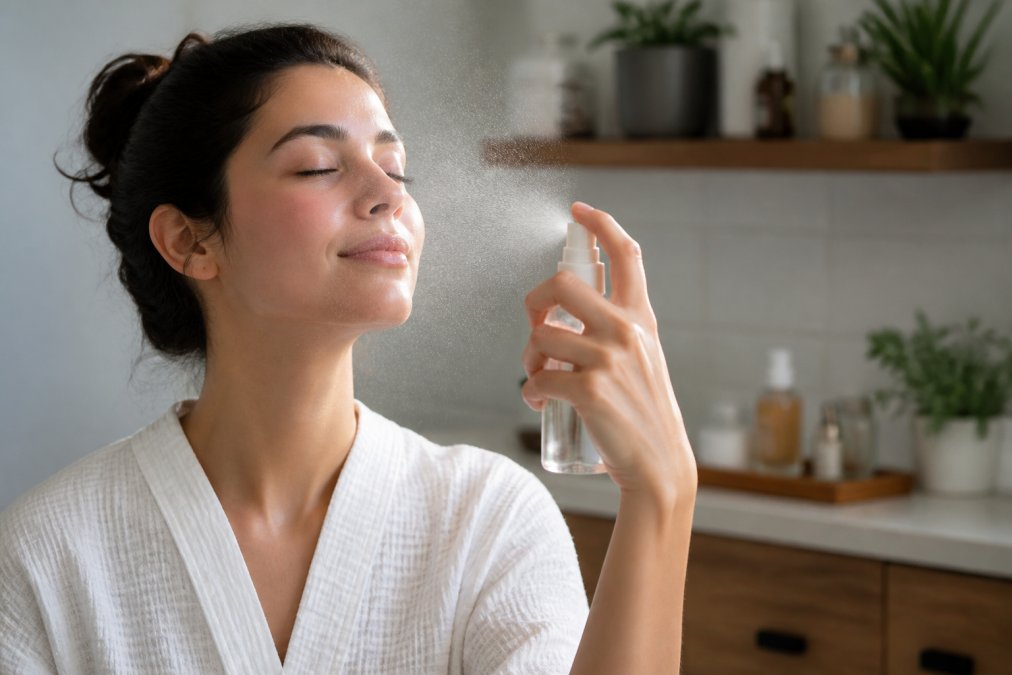
- A facial mist for midday top-ups
- A humidifier for dry rooms
That's it. Five items, no ten-step routine.
This guide walks through seven steps that work together.
Step 1: Spot the Signs of Dehydrated Skin
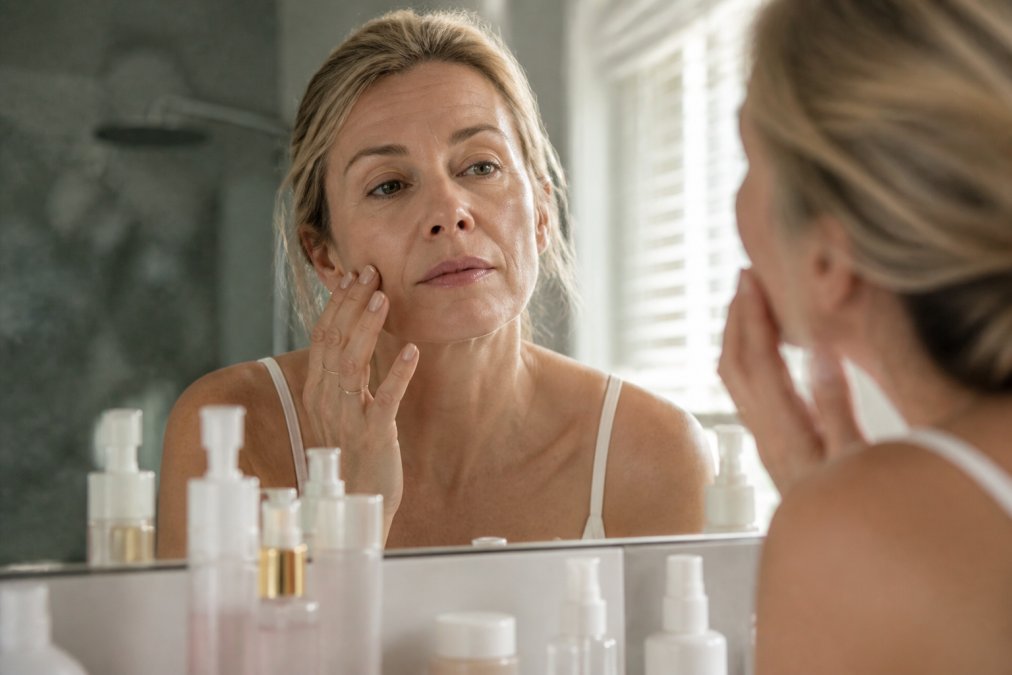
Dehydrated skin is skin that lacks water, not oil. It feels tight, looks dull, and shows fine lines that seem worse in the afternoon than the morning.
Watch for these signs:
- Tightness after washing your face
- Dull, gray-looking skin tone
- Fine lines that deepen by midday
- Flaking patches around the nose and cheeks
- Skin that drinks up moisturizer and still feels dry
Dehydrated vs. Dry Skin: Why the Difference Matters
Dry skin lacks oil. Dehydrated skin lacks water. Dry skin is a skin type you're born with. Dehydrated skin is a temporary state almost anyone can fall into.
Step 2: Switch to a Gentle Cleanser and Lukewarm Water
Hot water and harsh cleansers strip your lipid barrier. That barrier is what keeps water from escaping your skin.
The fix is simple:
- Turn the tap to lukewarm, never hot
- Choose a cream or gel cleanser with no sulfates
- Wash for 30 seconds, no more
- Pat dry, don't rub
Step 3: Apply the Best Ingredients for Dehydrated Skin to Damp Skin
The best ingredients for dehydrated skin are humectants: molecules that bind water and pull it into the upper layers of the epidermis. The four that carry most of the load are hyaluronic acid, glycerin, beta-glucan, and urea.
What each humectant actually does:
- Hyaluronic acid, holds up to roughly 1,000 times its weight in water. Low-molecular-weight versions penetrate deeper and plump faster; high-molecular-weight versions sit on the surface and give an immediate smoothing effect. Formulas that combine both weights tend to outperform single-weight serums.
- Glycerin, the workhorse. It is one of the most studied humectants in dermatology, cheap to formulate with, and effective at low concentrations (often 3-10%). It draws water from the air when humidity is above roughly 60%, and from the dermis when it isn't.
- Beta-glucan, a polysaccharide from oats and yeast. Slightly weaker as a water-binder than HA or glycerin, but it calms redness and supports barrier repair, which matters if your dehydration came with irritation.
- Urea, a humectant at low concentrations (under 10%) and a keratolytic (dead-skin-softening) agent at higher ones (10-40%). For dehydrated skin with flaking, a 5% urea cream is often the fastest visible fix.
Seal It In: Ceramides, Occlusives, and Emollients
- Emollients, lipids that soften and smooth the surface by filling the gaps between dead skin cells. Think squalane, jojoba, fatty alcohols, and most plant oils. They improve texture and feel, but they are only moderately good at stopping water loss.
- Occlusives, ingredients that form a physical film on top of the skin to block evaporation. Petrolatum is the gold standard (it reduces water loss by roughly 98% in published measurements), followed by mineral oil, lanolin, dimethicone, and shea butter. They feel heavy, which is why most people underuse them.
- Ceramides, not strictly an occlusive. They are the lipids that make up roughly half of your skin barrier by weight. Replacing them (typically in a 1:1:1 ratio with cholesterol and fatty acids) rebuilds the barrier itself, so less water escapes in the first place.
Step 4: Learn How to Layer Skincare for Maximum Hydration
Learning how to layer skincare for maximum hydration comes down to one rule: thinnest to thickest.
Here's the order that works:
- Cleanser
- Hydrating toner or mist
- Hyaluronic acid serum
- Moisturizer with ceramides
- Facial oil or occlusive (night only)
Step 5: Hydrate From the Inside and Outside
Internal hydration supports skin elasticity and suppleness, but it works slowly, on the order of weeks, not hours. Topical hydration works in minutes. You need both, but they are not interchangeable, and treating them as the same thing is why so many people drink a gallon of water a day and still have tight, flaky skin.
- Cucumber (about 96% water)
- Watermelon (about 92% water)
- Oranges (about 87% water)
- Tomatoes (about 94% water)
- Leafy greens (about 90-95% water)
Climate-Specific Hydration: What Changes in Humid vs. Arid Air
This is where most hydration guides stop, and where the real difference lives. Your skin loses water to the air at a rate called transepidermal water loss (TEWL). That rate depends heavily on the environment you are in, and the right routine in Miami is the wrong routine in Phoenix.
In arid or high-altitude climates (relative humidity under 40%):
- Humectants can pull water out of your skin if the air is drier than your dermis. Always apply to damp skin and seal within seconds.
- Occlusives are not optional here, they are the main event. A petrolatum or squalane layer at night is the single highest-impact change you can make.
- A humidifier set between 40% and 60% relative humidity in your bedroom measurably reduces overnight TEWL. Below 30% and you are fighting your own bedroom.
- Skip alcohol-based toners entirely. They feel refreshing and then accelerate water loss.
In humid climates (relative humidity above 60%):
- Humectants work in your favor, glycerin and HA can draw water straight from the air. You can often skip the heavy occlusive layer during the day.
- The risk flips from dryness to congestion. Heavy petrolatum-based creams can trap sweat and trigger breakouts. Choose lighter emollients (squalane, glycerin creams) and save occlusives for nighttime.
- Air conditioning is the hidden culprit. An office at 68°F with low humidity will dehydrate your skin as effectively as a desert, even when it is 90% humidity outside.
In winter, anywhere:
- Cold air holds less moisture, and indoor heating drops relative humidity further. This is peak TEWL season.
- Shorten showers, lower the temperature to lukewarm, and apply moisturizer within three minutes of toweling off, while the skin is still damp.
- A midday facial mist helps, but only if you seal it. Mist alone evaporates and takes surface water with it.
Indoor humidity and skin barrier function
Step 6: Stop Over-Exfoliating and Protect Your Skin Barrier
Over-exfoliation is the most common self-inflicted cause of dehydrated skin. Scrubs, acids, and retinoids all speed up cell turnover. Use too many at once and you thin your skin barrier.
Signs you're overdoing it:
- Stinging when you apply products
- Redness that lingers
- Flaking that moisturizer can't fix
Step 7: Build a Daily Hydration Routine That Sticks
Consistency beats intensity. A simple routine done daily works better than an elaborate one done twice a week.
Your daily plan:
| Time | Step | Purpose |
|---|---|---|
| Morning | Rinse with lukewarm water | Avoid stripping |
| Morning | Mist + hyaluronic serum | Add water |
| Morning | Ceramide moisturizer | Seal it in |
| Midday | Facial mist | Top up hydration |
| Evening | Gentle cleanse | Remove buildup |
| Evening | Serum + moisturizer + occlusive | Repair overnight |
Frequently Asked Questions
How long does it take to rehydrate your skin?
Most people notice smoother, more supple skin within 3 to 7 days of consistent care. The outer layer of your skin, the epidermis, responds fastest to humectants like glycerin and hyaluronic acid applied to damp skin. If transepidermal water loss has been ongoing, rebuilding your lipid barrier with ceramides can take 2 to 4 weeks. Results depend on how dehydrated your skin is, your climate, and whether you avoid hot water and over-exfoliation.
What is the difference between dry and dehydrated skin?
Dry skin is a skin type caused by low oil production and a weakened lipid barrier. Dehydrated skin is a temporary condition caused by a lack of water in the skin, and it can affect anyone, including people with oily skin. Signs of dehydrated skin include dullness, tightness, fine lines that look worse after cleansing, and increased sensitivity. Dry skin usually needs emollients and occlusives, while dehydrated skin responds best to humectants and internal hydration.
What ingredients hydrate skin the most effectively?
The best ingredients for dehydrated skin are humectants that pull water into the epidermis: hyaluronic acid, glycerin, urea, and beta-glucan. Pair them with barrier-supporting ingredients like ceramides to reduce transepidermal water loss. Apply humectants to damp skin, then seal with an occlusive or emollient. This combination supports moisture retention and a healthier skin microbiome far better than any single ingredient on its own.
Can drinking more water actually hydrate your skin?
Drinking water supports internal hydration, but it will not fix dehydrated skin on its own. Research shows that increasing water intake has a modest effect on skin hydration for people who are already well hydrated. The more reliable path is combining adequate water intake with topical humectants, a humidifier in dry indoor air, and water-rich foods like cucumber, watermelon, and citrus. Think of it as one layer of a routine, not the whole solution.
Dehydrated skin rarely needs a total overhaul. It needs the right order, the right ingredients, and a week of consistency. At CoastalTrade.store, our Pre- & Probiotic Refreshing Jelly Mist fits straight into step three: mist onto damp skin, then layer your serum and moisturizer on top. It's a two-second step that supports your skin microbiome while it hydrates. Browse the CoastalTrade.store collection and build a routine you'll actually keep.