 how-to
How to Reduce Skin Puffiness Naturally: 7 Proven Steps
Table of Contents
- What You'll Need Before You Start
- Step 1: Cut Sodium and Alcohol to Reduce Skin Puffiness
- Step 2: Hydrate and Balance Electrolytes
- Step 3: Try Lymphatic Drainage Massage for Face
- Step 4: Eat Foods That Reduce Facial Bloating
- Step 5: How to Reduce Morning Face Puffiness with Cold Therapy
- Step 6: Sleep Position and Pillow Elevation
- Step 7: Track Hormones, Allergens, and Medications
- Frequently Asked Questions
Last Updated: September 25, 2026
What You'll Need Before You Start
Reducing skin puffiness naturally starts with a few simple supplies and a little patience. Most of the steps in this guide use items you already have at home.
- A clean roller or your fingertips for facial massage
- A cold compress or a bowl of cold water
- A tall pillow or an extra pillow for elevation
- A water bottle to track hydration
- A simple note app for tracking triggers
Step 1: Cut Sodium and Alcohol to Reduce Skin Puffiness
The fastest way to reduce skin puffiness is to cut back on salt and alcohol. Both pull water into your face and slow the flow of fluid out.
Why Sodium Makes Your Face Puffy
Sodium intake is one of the biggest dietary triggers for a puffy face. Your body holds water to balance the salt, and that extra water shows up as swelling.
Try these swaps:
- Cook more meals at home so you control the salt
- Read labels and pick lower-sodium options
- Add herbs and citrus instead of salt for flavor
- Rinse canned beans and vegetables before eating
Alcohol's Role in Fluid Accumulation
Alcohol causes fluid accumulation in two ways. It dehydrates you, and it triggers inflammation. Your body responds by holding water, which shows up as morning swelling.
Step 2: Hydrate and Balance Electrolytes
Drinking more water sounds backward when your face is puffy. But hydration levels drive how your body holds fluid.
A simple plan:
- Aim for water through the day, not all at once
- Add potassium-rich foods like bananas and spinach
- Go easy on salty snacks that throw off the balance
- Watch caffeine and alcohol, which both pull water out
Step 3: Try Lymphatic Drainage Massage for Face
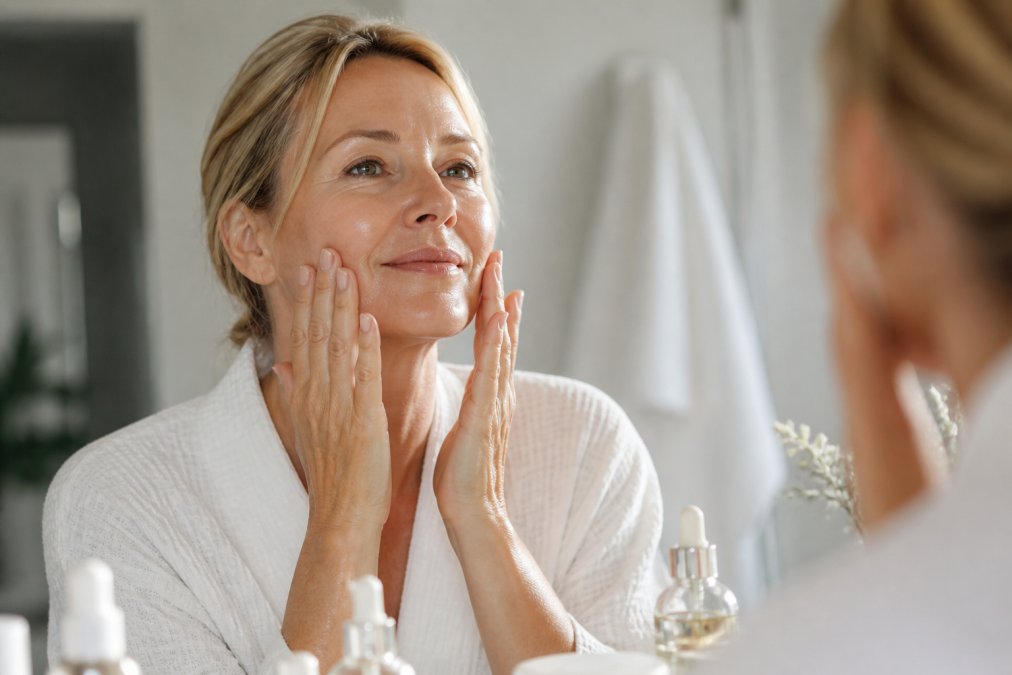
Lymphatic drainage massage for face is a gentle technique that moves trapped fluid toward your lymph nodes. Light, upward strokes help your circulatory system clear the buildup. The key word is gentle. Pressing hard does the opposite of what you want. You are guiding fluid, not kneading dough.
Where the Fluid Actually Drains
Your face does not drain randomly. Fluid moves through a network of lymph vessels toward a small number of collection points called lymph nodes. For the face, the relevant nodes sit in three clusters:
- Preauricular nodes, just in front of each ear, at the top of the jaw hinge
- Postauricular and occipital nodes, behind the ear and at the base of the skull
- Submandibular and cervical nodes, under the jawline and down the sides of the neck
A Simple 5-Minute Facial Massage Routine
Do this routine in the morning, or any time your face feels heavy. Wash your hands first, and apply a facial oil or a light mist so your fingers glide instead of tug.
- Neck first. Place your fingertips just below your collarbone and stroke gently downward toward your collarbone five times. This opens the drain before you push anything toward it.
- Under the jaw. Start at the center of your chin and sweep outward along the jaw to just below each ear. Five strokes per side.
- Along the jaw hinge. Press lightly in the hollow just in front of your ear (the preauricular point) and hold for two seconds, then release. Repeat three times per side.
- Cheekbones. Sweep from the sides of your nose out along your cheekbones toward your ears. Five strokes per side.
- Under the eyes. Use your ring finger, which applies the lightest pressure, and press gently from the inner corner out toward your temples. Five strokes per side.
- Brow and forehead. Sweep up and out from the center of your brow toward your hairline, then down the sides of your face toward your neck. Five strokes.
- Finish at the neck. Repeat the downward neck strokes from step one to clear what you just moved.
Tool-Specific Tips: Gua Sha, Rollers, and Fingertips
Each tool changes how much pressure you apply, and pressure is where most people go wrong.
- Fingertips are the safest option and the easiest to control. Use your ring finger around the eyes.
- A jade or stainless steel roller works best for broad, sweeping strokes along the jaw and cheeks. Roll up and out, never back and forth, and clean the roller after each use.
- A gua sha stone lets you apply a broader, flatter surface, which some practitioners find more effective along the jawline. Hold the stone almost flat against your skin, at roughly a 15-degree angle, and use the same up-and-out direction. A common mistake is digging the edge in, which irritates skin and does not move lymph any faster.
How Often and What to Expect
Most practitioners suggest once a day, five minutes at a time, and note that consistency matters more than duration. Some people see a visible difference within a few days; others need a couple of weeks. If your skin turns red and stays red, you are pressing too hard. If you have a skin infection, active acne cysts, or a recent facial procedure, skip massage in that area and check with a dermatologist first.
Step 4: Eat Foods That Reduce Facial Bloating
Foods that reduce facial bloating work by fighting inflammation and balancing sodium. Anti-inflammatory choices calm the tissue, while potassium flushes extra water.
Build meals around these:
- Leafy greens like spinach and kale
- Bananas, oranges, and melons
- Cucumber and celery, which are high in water
- Berries, which are rich in anti-inflammatory compounds
- Fatty fish like salmon for omega-3s
Potassium-Rich Foods and Anti-Inflammatory Choices
Potassium helps your body release sodium and the water it holds. Pair it with anti-inflammatory foods for the best effect.
Skip or limit:
- Processed meats and salty snacks
- Sugary drinks and refined carbs
- Fried foods and heavy sauces
Step 5: How to Reduce Morning Face Puffiness with Cold Therapy
Cold therapy is the quickest fix for morning puffiness. Cold causes blood vessel constriction, which tightens tissue and pushes fluid out.
Try one of these:
- Splash your face with cold water for 30 seconds
- Hold a cold compress under your eyes for a few minutes
- Run an ice roller over your face in upward strokes
- Dip your face in a bowl of cold water for a quick reset
Step 6: Sleep Position and Pillow Elevation
Sleep position changes how fluid settles overnight. Lying flat lets fluid pool around your eyes and cheeks. A little elevation lets gravity help.
Other sleep habits that reduce puffiness:
- Keep the room cool and dark
- Skip salty snacks before bed
- Remove makeup so your skin can breathe
- Aim for seven to eight hours
Step 7: Track Hormones, Allergens, and Medications
Sometimes puffiness is not about salt or sleep. Hormones, allergens, and medications can all cause fluid buildup, and none of them respond to drinking more water. Tracking helps you find the real trigger so you stop guessing.
Hormonal Cycle Tracking
Hormone shifts can cause water retention and facial puffiness. The pattern most people notice is swelling in the days before a period, driven by rising progesterone and falling estrogen, which changes how the body handles sodium and fluid. Some people also notice puffiness around ovulation.
A simple tracking method:
- Note the first day of each period on a calendar or in a notes app.
- Each morning, rate your facial puffiness on a 1-to-5 scale before you look at anything else.
- After two or three cycles, look for a pattern. If your puffiest days cluster in the same phase each month, you have your answer.
Allergens vs. Dietary Bloating
Allergens are a hidden cause of puffiness, and they are easy to confuse with ordinary water retention. The difference is usually timing and location:
- Dietary bloating tends to show up as general facial fullness, often in the morning, and fades within a day.
- An allergic reaction often shows up as swelling around the eyes, sometimes with redness, itching, or a rash, and can appear within minutes to a couple of hours of exposure.
- Contact dermatitis from a new skincare product usually stays in the area where you applied it, with itching or flaking.
Common culprits to watch:
- Dairy, gluten, or added sugars
- Pollen and dust
- New skincare products
- High-histamine foods like aged cheese and wine
Medication Side Effects
Medication side effects matter too, and this is the trigger most articles skip. Several common classes of drugs can cause systemic water retention that shows up in the face:
- Blood pressure medications, especially calcium channel blockers
- Corticosteroids, including prednisone
- Nonsteroidal anti-inflammatory drugs (NSAIDs) like ibuprofen and naproxen, with regular use
- Some diabetes medications
- Certain antidepressants
Putting the Tracking Together
Use one notes app for all three triggers. Log your cycle phase, any new foods or products, and any medication changes. After a month, you will usually see which lever actually moves your puffiness, and you can stop treating symptoms you do not have.
Frequently Asked Questions
How do I depuff my face quickly?
Cold therapy works fastest. Splash cold water on your face or hold a cold compress against your cheeks and under-eyes for 1-2 minutes. The cold causes blood vessel constriction, which reduces fluid accumulation in the subcutaneous tissue. Follow with a gentle lymphatic drainage massage, sweeping from the center of your face outward toward your ears and down your neck. Drinking a glass of water with electrolytes also helps flush excess sodium.
What is the main cause of face puffiness?
The most common cause is water retention driven by high sodium intake, alcohol, or poor sleep. When you eat salty foods, your body holds extra fluid to dilute the sodium, and that fluid collects in the loose tissue around your eyes and cheeks. Other causes include lying flat during sleep, hormonal fluctuations, allergic reactions, and certain medications such as corticosteroids or blood pressure drugs.
Does magnesium get rid of a puffy face?
Magnesium supports electrolyte balance, which can help reduce water retention when low levels are the underlying issue. Some people find that a magnesium-rich diet or a topical magnesium spray helps with morning swelling. However, magnesium is not a quick fix for puffiness caused by high sodium, alcohol, or allergies. Address those dietary triggers first, and talk to your doctor before adding supplements.
Can drinking more water reduce facial bloating?
Yes. When you are dehydrated, your body holds onto fluid, which can show up as facial puffiness. Drinking enough water throughout the day supports your circulatory system and helps your kidneys flush excess sodium. Pair your water intake with potassium-rich foods like bananas, spinach, or avocado to maintain electrolyte balance. Aim for a consistent daily intake rather than chugging large amounts at once.
Puffiness rarely has one cause, and that is why quick fixes often fall short. The steps above work best as a routine, not a one-time cure. Coastaltrade carries everyday skincare picks like the Pre- & Probiotic Refreshing Jelly Mist to support a calm, balanced skin barrier as part of your daily care. Explore the Coastaltrade lineup to build a simple routine that fits your life, and start with one step today.