 ultimate-guide
Science Backed Skincare for Dark Circles
Table of Contents
- Why Science Backed Skincare for Dark Circles Beats Guesswork
- The Four Causes of Under-Eye Darkness and How to Identify Yours
- Vitamin C for Dark Circles: Evidence and Best Forms
- Retinol Eye Cream for Dark Circles: Benefits and Cautions
- How to Get Rid of Dark Circles: A Cause-Specific Routine
- Choosing the Best Eye Cream for Dark Circles by Cause and Skin Tone
- Safety, Irritation, and When to See a Dermatologist
- Conclusion: Realistic Expectations and Next Steps
- Frequently Asked Questions
Last Updated: October 9, 2026
Why Science Backed Skincare for Dark Circles Beats Guesswork
Most under-eye creams fail because they treat every dark circle the same. Science backed skincare for dark circles starts by identifying which of four distinct causes you actually have.
Dark circles are a visible symptom with at least four underlying mechanisms, each responding to different actives. A vitamin C cream does little for a tear trough hollow, just as a caffeine serum will not fade melanin pigmentation.
Below: how to identify your cause, which ingredients have the strongest reasoning behind them, how to build a routine for the right problem, and the safety limits nobody mentions until irritation shows up.
The Four Causes of Under-Eye Darkness and How to Identify Yours
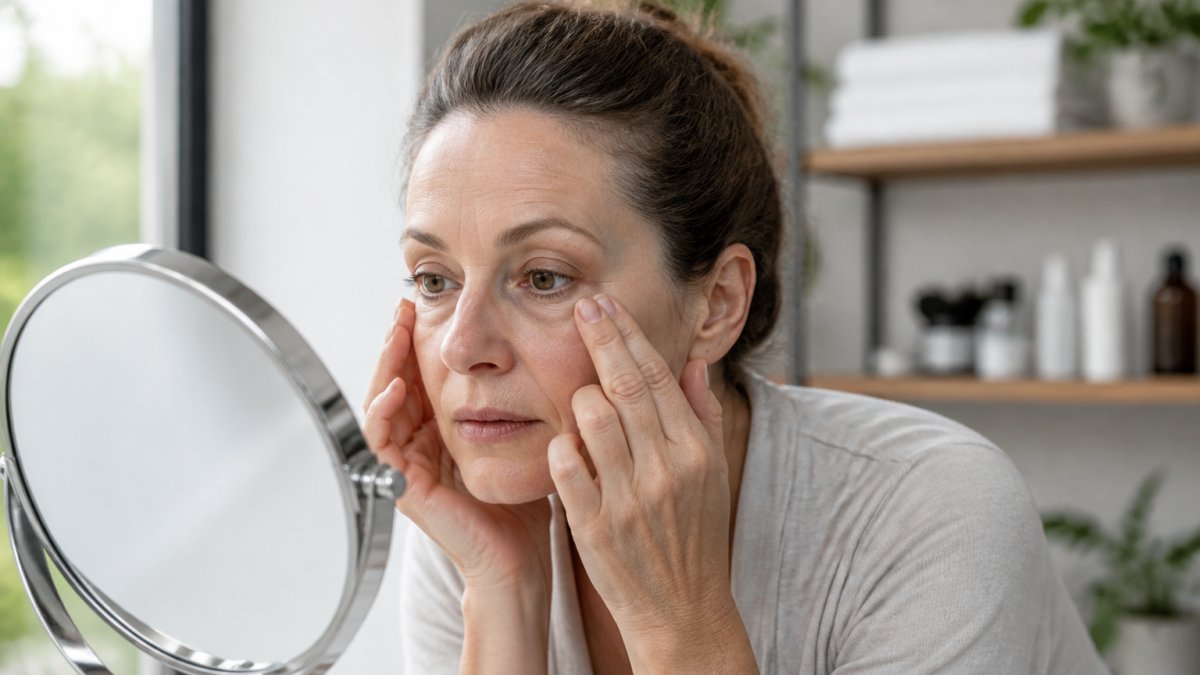
Identifying your cause takes about five minutes with a mirror and good lighting, and it changes every product decision that follows.
Here is how to tell them apart.
Vascular Darkness: Blue or Purple Tones
Vascular darkness shows as blue, purple, or pink tones and looks worse when you are tired, dehydrated, or congested. Stretch the skin under your eye; if the color shifts toward a more visible blue-purple, the vessels beneath are the source. It responds to caffeine, which temporarily constricts vessels, and to barrier-supporting ingredients over time.
Pigmentation: Brown or Gray-Brown Tones
Pigmented dark circles read as brown or gray-brown and do not change when you stretch the skin. They are common across all skin tones and frequently deeper in melanin-rich skin, and respond to brightening actives such as vitamin C and niacinamide, plus daily sun protection.
Structural Shadowing: Hollows and Tear Troughs
Structural shadowing is a shadow, not a color. Tilt your head toward a light source; if the darkness deepens or fades with the angle, a hollow or tear trough is casting it. No topical product fills a hollow, hydration and plumping ingredients can soften the look, but the contour is a clinician conversation.
Puffiness and Fluid Retention
Fluid retention shows as puffiness that is worse in the morning and shifts through the day, often tracking with salt intake, sleep position, and allergies. Cooling, depuffing ingredients and a slightly elevated sleeping position help more than any single active.
| Cause | Visual Clue | Best-Matched Ingredients |
|---|---|---|
| Vascular | Blue or purple, shifts when stretched | Caffeine, barrier support |
| Pigmentation | Brown or gray-brown, stable | Vitamin C, niacinamide |
| Structural | Shadow changes with light angle | Hydration, plumping |
| Fluid retention | Puffy, worse in the morning | Cooling, depuffing agents |
Vitamin C for Dark Circles: Evidence and Best Forms
Vitamin C for dark circles is most defensible when the cause is pigmentation or dullness, because it interrupts the pigment pathway and supports collagen.
Form matters more than concentration. L-ascorbic acid is the most studied form but the most likely to sting on delicate under-eye skin.
A few practical points we have learned to repeat:
- Apply vitamin C in the morning, before sunscreen.
- Start every other day if your skin is sensitive or redness-prone.
- Layer it under a moisturizer rather than directly against bare skin if you feel tingling.
The American Academy of Dermatology's guidance on antioxidants consistently supports antioxidant use alongside sun protection, and sun protection is non-negotiable for pigmented dark circles.
Retinol Eye Cream for Dark Circles: Benefits and Cautions
Retinol eye cream for dark circles works indirectly, encouraging skin turnover and supporting skin thickness over time, which can reduce the look of shadowing and fine lines.
The catch is tolerability. Under-eye skin is among the thinnest on the body, and retinoids cause peeling, redness, and dryness when introduced too fast.
A workable introduction schedule:
- Start with a low-strength retinol once per week at night.
- Apply a pea-sized amount across both eyes, avoiding the lash line.
- Buffer with moisturizer on top for the first month.
- Increase to twice weekly only if there is no irritation after two weeks.
Expect results in months, not days. Skin-thickening ingredients need time to show visible change, and pushing faster usually ends in a pause, not progress.
How to Get Rid of Dark Circles: A Cause-Specific Routine
How to get rid of dark circles realistically comes down to consistency plus cause-matching, not a miracle product. Build the routine around your identified cause, keep it short enough to follow, and give it a fair timeline.
Morning Routine for Vascular and Pigmentation Dark Circles
Start with a gentle cleanse, then a vitamin C or niacinamide serum for pigmentation. Follow with a caffeine-based eye product if vascular darkness is present, and finish with broad-spectrum sunscreen, the step most people skip and the one that protects every gain you make against pigmentation.
Evening Routine for Skin Thickness and Repair
Cleanse, then apply your retinoid or bakuchiol on the nights you use it. Follow with a hydrating eye cream containing hyaluronic acid or peptides to support the moisture barrier overnight; on non-retinoid nights, a barrier-focused moisturizer is enough. Hydration matters more than most expect, because dehydrated skin looks duller and shadows read more strongly.
| Time | Step | Purpose |
|---|---|---|
| Morning | Vitamin C or niacinamide | Brighten and defend |
| Morning | Caffeine eye product | Constrict visible vessels |
| Morning | Sunscreen | Prevent pigment deepening |
| Evening | Retinol or bakuchiol | Support skin thickness |
| Evening | Hydrating eye cream | Repair moisture barrier |
Choosing the Best Eye Cream for Dark Circles by Cause and Skin Tone
The best eye cream for dark circles is the one matched to your cause, skin tone, and tolerance, not the longest ingredient list. Most guides stay vague here, so let us be specific about two things they skip: how strong the evidence really is for each ingredient, and how the same darkness presents across skin tones.
How Strong Is the Evidence, Really?
Ingredient claims and clinical evidence are not the same thing, and the gap matters when you are spending money on a small jar.
- Caffeine: Reasonably supported for short-term constriction of visible vessels and reducing the look of puffiness. The effect is temporary, a cosmetic freshening step, not a treatment. Most studies measure appearance right after application, not months later.
- Vitamin C and niacinamide: Supported for improving the look of uneven pigmentation and for antioxidant defense. But many studies are small, short, or use different forms and concentrations, so results do not transfer neatly between products.
- Retinoids: Supported for skin texture and thickness over time, which can soften shadowing and fine lines. Under-eye tolerability is the limiting factor, and most trials are not run on the eye contour specifically.
A useful rule: if a claim sounds like it reverses a structural cause, be skeptical. Topicals work on color, hydration, and surface texture. They do not fill a hollow or reroute a vessel.
How Dark Circles Present Across Skin Tones
A one-size-fits-all recommendation fails here, because the same darkness behaves differently depending on how much melanin is in the skin.
- Melanin-rich skin is more prone to post-inflammatory hyperpigmentation, so irritation can deepen the very darkness you are treating. Gentle, non-irritating brighteners and consistent sun protection matter more than aggressive exfoliation. Pigmented darkness also sits deeper and is more stubborn, so patience beats intensity.
- Lighter skin tones often show vascular darkness more visibly, because thin skin over blue-purple vessels reads clearly. Caffeine, barrier support, and hydration earn their place here.
- Across all tones, structural shadowing from a tear trough or hollow looks similar and responds the same way, not much to topicals. This is the one cause where skin tone changes nothing about the recommendation.
Reading a Label Without Getting Fooled
When you compare products, prioritize:
- Fragrance-free and allergy-tested formulas if your skin is sensitive or redness-prone, since fragrance is a common eye-area irritant.
- A single hero active rather than five actives competing for the same thin skin.
- Reparative ingredients such as peptides, ceramides, and hyaluronic acid to support the barrier.
A common mistake is stacking a vitamin C serum, a retinol, and an acid in the same week near the eye. The skin cannot recover fast enough, and irritation mimics the darkness you are trying to fix. Fewer, better-matched products win.
This is where a lightweight, barrier-friendly step earns its place. A product like the Pre- & Probiotic Refreshing Jelly Mist fits a minimal routine: a quick, hydrating layer that supports the skin without adding another heavy cream.
Safety, Irritation, and When to See a Dermatologist
Safety around the eyes is not a footnote, and it is the angle most guides skip. The under-eye area is thin, close to the eye, and quick to react, getting this right is what lets you stay consistent long enough to see results.
Patch Testing and Introduction
Patch-test any new active on your jawline or inner forearm for a few days before bringing it near the eye. Introduce one product at a time so you know what caused any reaction, and start at the lowest frequency you can tolerate, building up slowly.
Ingredient-Specific Cautions Near the Eye
- Retinoids: The most common source of peeling, redness, and dryness. Start once weekly with a pea-sized amount across both eyes, avoid the lash line and eyelid margin, buffer with moisturizer for the first month, and do not layer with acids the same night.
- Acids (AHA, BHA, stronger exfoliants): Generally too aggressive for the eye contour. If you use them elsewhere on the face, keep them away from the immediate under-eye area.
- Vitamin C: High concentrations of L-ascorbic acid can sting delicate skin. Gentler derivatives trade potency for tolerability, often the right call near the eye.
When to Stop and Let the Barrier Recover
If a product causes stinging, persistent redness, flaking, or burning that does not settle within a day, stop it. Pause all actives, return to a plain hydrating moisturizer, and let the barrier recover before reintroducing anything one product at a time. Pushing through irritation usually deepens the darkness you are trying to fix, especially in melanin-rich skin where inflammation can leave lasting pigment.
Non-Skincare Options and Their Limits
Non-skincare options exist and are worth knowing about. For structural shadowing from a tear trough, topical products have a hard ceiling, and a clinician can discuss options that skincare cannot reach. The U.S. Food and Drug Administration's consumer information on cosmetic safety is a useful starting point for understanding what cosmetic claims can and cannot promise.
When to See a Dermatologist
See a dermatologist if you notice:
- Darkness in only one eye, or a sudden change in appearance
- Swelling, pain, or a rash that does not settle
- Dark circles that persist despite months of consistent, cause-matched care
Persistent puffiness or darkness can occasionally signal an underlying issue, and a clinician is the right person to rule that out. For structural or hereditary causes, professional assessment matters more than any topical product, knowing that early beats another failed eye cream.
Conclusion: Realistic Expectations and Next Steps
The honest challenge with dark circles is that no topical product erases a structural hollow or reverses years of sun exposure overnight.
Start by identifying your cause, pick one brightening or reparative active, and add a barrier-supporting step you will actually keep. Build an under-eye routine matched to your skin, not to a trend.
Frequently Asked Questions
What skincare ingredients are backed by evidence for dark circles?
Vitamin C, niacinamide, caffeine, retinoids, and hyaluronic acid have the strongest supporting evidence. Vitamin C and niacinamide address pigmentation; caffeine constricts blood vessels to reduce vascular darkness; retinoids thicken skin over time; hyaluronic acid plumps and hydrates. The key is matching the ingredient to your specific cause, not layering everything at once.
Can vitamin C help reduce dark circles under the eyes?
Yes, vitamin C for dark circles works best when pigmentation or dullness is the cause. It inhibits tyrosinase, the enzyme that drives excess melanin, and supports collagen. Look for stabilized forms like L-ascorbic acid, sodium ascorbyl phosphate, or tetrahexyldecyl ascorbate. Apply in the morning under sunscreen for the best results.
How can you tell whether dark circles are caused by pigmentation or visible blood vessels?
Gently stretch the under-eye skin. If the color stays brown, pigmentation is likely. If it shifts toward blue or purple, vascular darkness is the cause. Another test: look in natural light. Brown or gray-brown tones point to melanin; blue, pink, or purple tones point to visible blood vessels. Your answer determines whether vitamin C or caffeine belongs in your routine.
How long does it take for eye cream to improve dark circles?
Hydration and puffiness improve within days. Pigmentation and vascular changes take longer: 8 to 12 weeks of consistent use is typical. Retinol eye cream for dark circles may show skin-thickening benefits in 12 to 24 weeks. Take a photo in the same lighting every two weeks to track subtle progress.
What do dermatologists recommend for dark circles?
Dermatologists typically recommend a cause-first approach: identify whether the darkness comes from pigment, vessels, or structural shadowing. For pigment, they suggest vitamin C or niacinamide. For vascular, caffeine or cold compresses. For structural causes, they may discuss fillers or laser treatments. Sunscreen and gentle cleansing are non-negotiable for everyone.
Can dark circles be erased naturally?
No topical product erases dark circles completely, but natural approaches can reduce their appearance. Sleep, hydration, and sun protection help. Cold compresses and caffeine reduce puffiness. For pigmentation, vitamin C and niacinamide fade discoloration over time. Structural shadowing from tear troughs requires in-office options like fillers, not creams.